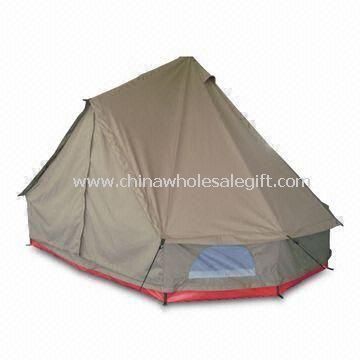
Bell Tent
A bell tent rises from the grass on a single center pole, its walls sloping outward to a wide circular floor, and that silhouette is what separates it from every dome camping tent on the field. The form sheds rain, holds headroom across most of the floor, and gives a group a gathering space rather than a row of sleeping slots.
Construction follows the shape: a central mast, a ring of perimeter poles or guy lines, and a roof cone stitched to straight walls. The canvas camping tent tradition shows here, with breathable fabric walls and a groundsheet sewn or zipped in. Doors and mesh vents sit in the wall panels, and a stove jack or cable entry may appear on heavier builds.
Buyers comparing this entry with an inflatable camping tent or a pop up camping tent should weigh packed weight, pole material, and how the groundsheet attaches. Ask whether seams are taped, how the door zips are shielded, and whether the bag fits a solo camper or needs a cart. Request a sample pitch to check guy line count and stake quality.
Promotional suppliers favor the bell tent for festival sponsorships, hospitality lounges, and branded glamping setups because the large wall panels take printed banners well. Family camping tent shoppers see the open floor as room for cots and gear, while a leisure camping tent buyer may choose a lighter shell for weekend trips. Scouts, retreat organizers, and event crews round out demand.
Stocking decisions should track the price band: low-to-mid range models usually pair a modest fabric weight with steel or fiberglass poles, so confirm the wall fabric, floor coating, and pole diameter before committing. Compare door height and floor diameter against the family camping tent and luxury tent lines already carried, and check that the carry bag and stake kit ship with each unit.
1 products