Cardboard car sunshades
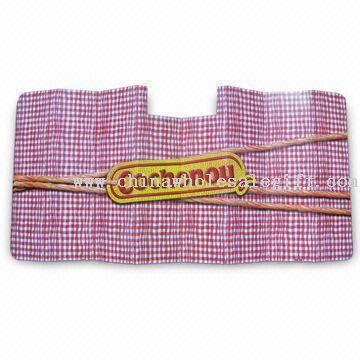
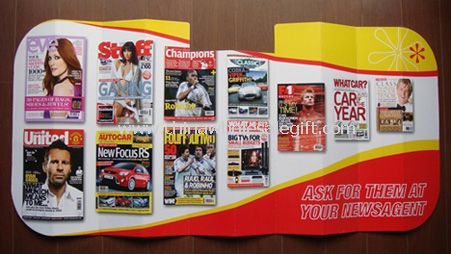
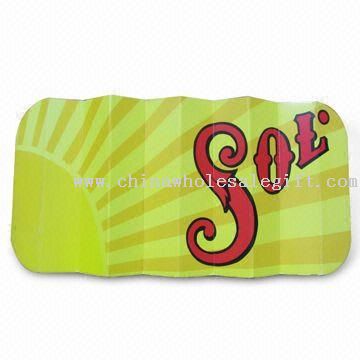
Cardboard car sunshades unfold across a windshield to block glare and keep a parked cabin cooler, and they remain one of the most economical branded items in the auto accessory aisle. The family covers the plain folding card, the anti-UV function version, and the front sunshade cut to sit beneath the rearview mirror. Each is lightweight, stacks flat for storage, and prints cleanly across a broad face.
Construction is straightforward: dense cardboard stock, often laminated or coated on the outward side, scored and cut so the panel folds into a compact fan shape. Buyers should check board thickness, the fold score quality, edge finishing, and whether the reflective or anti-UV layer is bonded rather than loose. A sturdy front sunshade should hold its shape when opened and slide behind a visor without bending.
Promotional suppliers and distributors favor this range because the printable area suits full-color logos, dealership names, and event artwork, while the flat-packed format keeps freight efficient for importers filling mixed cartons. Mid-range positioning fits giveaway programs tied to car sales, insurance renewals, and service reminders. Wholesale buyers typically request samples to confirm print registration and fold memory before committing to a run.
Drivers use them daily in summer, spreading the panel against the glass at work or in a lot and folding it away in seconds. Fleet managers appreciate a branded version for company vans, and rental counters hand them out as practical keepsakes. Because the card is rigid but light, end users notice the difference between a flimsy insert and a properly scored sunshade almost immediately.
Compare this shelf with the nylon and mesh car sunshade lines, which offer fabric flexibility, and with roller and windshield sunshade formats for permanent mounting. Cardboard wins on print coverage and cost per unit; the trade-off is durability in repeated handling. Practical sourcing checks include board grade, coating uniformity, fold-line sharpness, and how the panel behaves after extended exposure to heat.
3 products