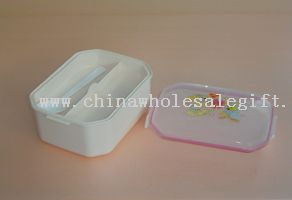
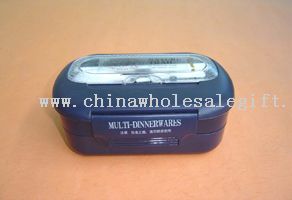
Combinatorial lunch box
A combinatorial lunch box pairs separate compartments in one carried unit, so a main dish, a side, and a snack stay apart until the lid comes off. The format favors eaters who dislike flavors running together, and it gives promotional buyers a single item that reads as a complete meal kit rather than a plain container.
These boxes typically combine stacked or side-by-side sections with a shared outer shell, and the layout matters more than the material. Buyers should check that each section seals on its own, that the closure holds when the box is carried upright, and that the pieces nest back together without forcing. A double layers octagon lunch box shows how shape and depth change capacity.
Mid range positioning suits this shelf well, since the extra tooling and parts justify more than a basic tub while still staying accessible for volume programs. Distributors source combinatorial lunch boxes for workplace wellness kits, school supply bundles, and branded employee gifts. Corporate buyers like the visible utility; families and office workers like a hot item and a cold item sharing one handle.
End users judge the box on the first packed lunch: whether dressings stay put, whether a fork fits, and whether the whole unit survives a commute in a tote bag. Practical sourcing checks include hinge strength, lid fit after repeated opening, and whether the compartments are easy to wipe clean. Ask for samples packed with real food before committing to a large run.
Shelf neighbors such as a tin lunch box or a lunch box set serve different habits, and the combinatorial design earns its place when portion variety is the priority. Review carton packing to protect stacked pieces in transit, confirm color consistency across sections, and verify that the closure works after washing. These checks keep returns low and keep the format selling at its mid range level.
2 products