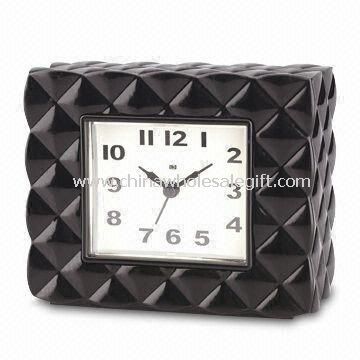
Die Cast Clocks
A die cast clock begins as molten metal poured into a steel mold, then cools into a case with crisp edges, fine surface detail, and a heft that plastic cannot match. On a desk or reception counter, that weight matters: the clock stays put when a sleeve brushes past, and the finish holds its character through daily handling. The shelf currently carries a single piece, a table alarm clock with a die-cast bezel case, so the range reads as focused rather than sprawling.
Construction follows a predictable sequence. The mold is filled under pressure, the casting is trimmed and polished, and the case is fitted with a movement, dial, and hands. Bezels and housings accept matte, brushed, or polished treatments, and the metal takes enamel or paint cleanly for dial markings. Because the case shell carries the visual weight, tooling and finish decisions made early shape how the clock reads in a printed catalog or on a trade table.
Wholesale buyers treat this family as a gift and premium item rather than a volume giveaway. Importers, distributors, and promotional suppliers place it alongside commercial watch, wall clock, and timepiece lines to give a program a higher-grade tier. Corporate accounts favor it for desk gifts and recognition awards, where a metal case signals care. Sourcing checks should cover casting quality, mold seams, bezel fit, movement accuracy, and the consistency of the finish from unit to unit.
End users meet these clocks in offices, studies, hotel rooms, and bedside settings. The metal bezel gives the face a clean frame, which suits desks shared with laptops and paperwork. An alarm function keeps the piece practical rather than purely decorative. Buyers should confirm dial legibility at arm's length, hand alignment, and the sound of the alarm, since a quiet bedroom or a shared workspace makes tone and volume part of the purchase.
Presentation carries real weight in this category. A die cast case looks best in a fitted box that protects the bezel in transit and supports the metal feel at unboxing. Buyers often cross-merchandise the clock with a watch box or a mini clock to build a coordinated desk set. Screen-printed logos and etched plates suit promotional runs, while retailers may favor a restrained look that lets the casting detail speak.
1 products