Flying alarm clock
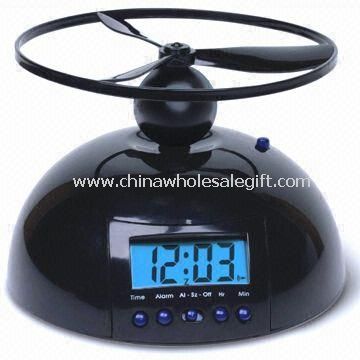
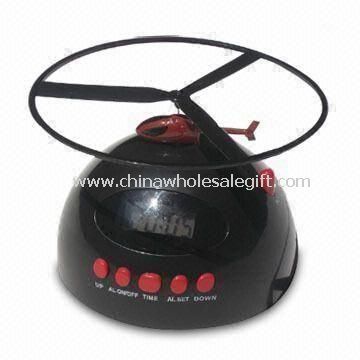
A flying alarm clock sends a small propeller-driven rotor spinning off its base when the alarm sounds, forcing the sleeper out of bed to retrieve it and silence the noise. The mechanism is simple: a motorized launch, a lightweight flying piece, and a dock that catches it again for the next morning. The result turns waking into a physical task rather than a button press.
The shelf carries two versions of this idea. One pairs the airborne rotor with a back light and a snooze function for nighttime reading and gentler mornings. The other adds a music clock radio with a calendar, so the same device covers wake-up sound, date reference, and the flying action in a single unit.
Build quality matters most around the rotor housing and the motor mount, since those parts take repeated launches. Buyers should check that the flying piece seats firmly in its cradle, that the back light is readable without glare, and that button labels hold up. For the music clock radio variant, confirm the calendar format and how snooze interacts with the flying cycle.
For importers and promotional suppliers, this category suits novelty gift assortments, corporate incentive programs, and student-focused catalogs, where a memorable desk object outsells a plain bedside clock. Warehouse buyers often pair it with a quartz analog alarm clock or a twin bell alarm clock to balance traditional and playful options on the same shelf.
End users are heavy sleepers, shift workers, and gift recipients who want something more engaging than a standard beeper. Practical sourcing checks include box dimensions for shelf fit, battery compartment access, and whether the instruction sheet explains the rotor reset clearly. Request samples to test the launch sound level, since a quiet hotel room and a shared dorm differ sharply.
2 products