Folding keyboard
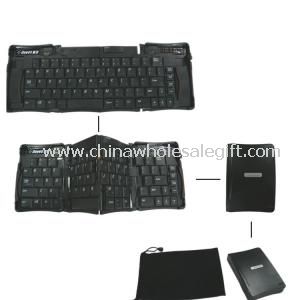
A folding keyboard splits at a hinge or seam and closes to roughly the footprint of a large phone, so it travels in a side pocket rather than a laptop sleeve. On a café table or a train tray, it unfolds into a familiar key grid for notes, emails, and order entry. Three models sit on this shelf, all pitched at the mid range.
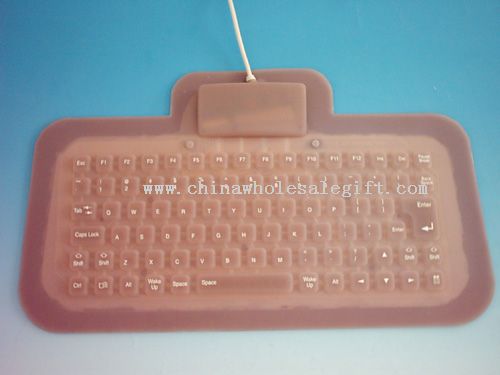
The build centers on the hinge and the deck. Hinged halves need a firm stop so the board sits flat, not bowed, and a key layout that stays usable when folded. Look at key travel, the spacing between keys, and whether the seam falls in dead space rather than across the typing row. A USB foldable keyboard keeps its cable tethered and needs no pairing.
Wholesale buyers in the promotional trade favor this category because a folding model packs down small and suits branded giveaways. Distributors serving traveling sales staff and field engineers often stock a foldable keyboard alongside standard keyboard lines, since the compact build fits sample cases, conference bags, and roadside kits without adding bulk to an order.
Daily users are commuters, students, and anyone typing on a tablet in a shared space. A folding board gives them real travel and a stable deck instead of glass. Check that folding does not bury a key under the seam, that the closed unit protects the keycaps, and that the cable or pairing routine is short enough for quick setup.
Before committing a case, ask for a sample and open and close it repeatedly to test the hinge stop. Confirm the folded dimensions against your shipping carton, review the key print under close light, and check that the deck sits flat on an uneven surface. Match the connection type to your buyer base, then compare the three models side by side.
3 products