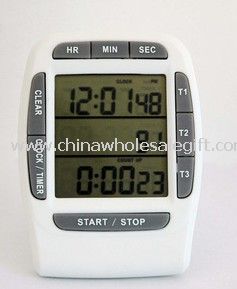
Lab Timer
A lab timer sits on the bench where precision matters: beside a shaking bath, under a fume hood, next to a drying oven, marking the minutes a sample needs before the next step. This shelf covers the compact countdown units favored for that role, grouped under electric gifts and sold at the low-to-mid range of the promotional market.
The family centers on a single direct item, the Lab digital Timer, which defines the shape buyers should expect: a tabletop or clip-mounted body, a clear readout, and simple buttons for setting hours, minutes, and seconds. Operation is straightforward, so staff can start a countdown without training, and the housings are built to survive repeated handling on shared work surfaces.
Imported units move through distributors and promotional suppliers who pair them with other timing items on the same order. Because the subtree holds one product, buyers gain depth from the surrounding shelf instead: a kitchen timer for break rooms, a sand timer for display, a mechanical timer where batteries are unwelcome, a waterproof timer for wet areas, and a mini timer or keychain timer for travel kits.
End users range from lab technicians and pharmacy staff to teachers running classroom experiments, hobbyists timing resin or curing, and home cooks who want a second countdown clock. Each relies on an audible alert and a display readable at a glance, so the practical checks are alarm volume, button feel, battery compartment access, and whether the stand or magnet holds the unit steady.
Wholesale buyers should inspect samples for a crisp display angle, a count up function alongside countdown, and packaging that survives shipping. Confirm the case material, the battery type supplied, and whether the housing resists splashes from a nearby sink. A multifunctional timer that switches modes cleanly outsells a single-purpose unit, and steady stock keeps repeat orders simple.
1 products