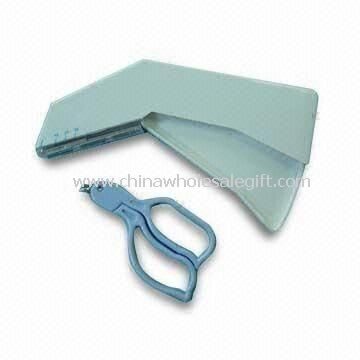
Skin stapler
A skin stapler sits at the crossover point between an office supply shelf and a clinical procedure tray, a compact handheld tool that fires surgical-grade staples to close a wound. Its brushed housing, curved jaw, and single-squeeze trigger separate it from the wire-forming mechanisms of a heavy duty stapler or a book stapler. Buyers browsing this corner of the catalog usually know exactly what they need.
The family is built around a trigger-driven magazine. A disposable skin stapler arrives preloaded and sterile, with the staples stacked in a straight row behind a fixed anvil; the user seats the jaw, squeezes once, and the staple bends into a rectangle that holds tissue edges together. Removable models accept refill cartridges so the body is reused. Either way, the tool delivers one staple per stroke.
Interest arrives from two directions. Distributors and promotional suppliers stock units for clinics, veterinary practices, and first-aid programs, while end users include nurses, field medics, and animal care staff who want a fast, predictable closure without threading a needle. A plier stapler stays on the desk; this instrument belongs in a treatment kit, which is why it shares little with a mini stapler or an electric stapler.
Design details matter to both audiences. The jaw should be slim enough to reach tight spots, the trigger should reset cleanly after every stroke, and the staple line should sit flush with the surface. Single-use versions prioritize hygiene, while reusable bodies trade that for refill economy. Packaging should keep the sterile barrier intact until the moment of use.
Wholesale buyers should inspect magazine alignment, confirm that refill cartridges match the body, and check how the trigger feels under repeated squeezing. Ask how units are packed for travel and how the sterile wrap is folded. Order a small sample batch first and test the jaw, the staple bend, and the reset action before committing to a full shelf.
1 products