Wheel Alarm clock
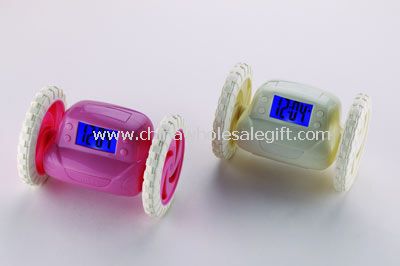
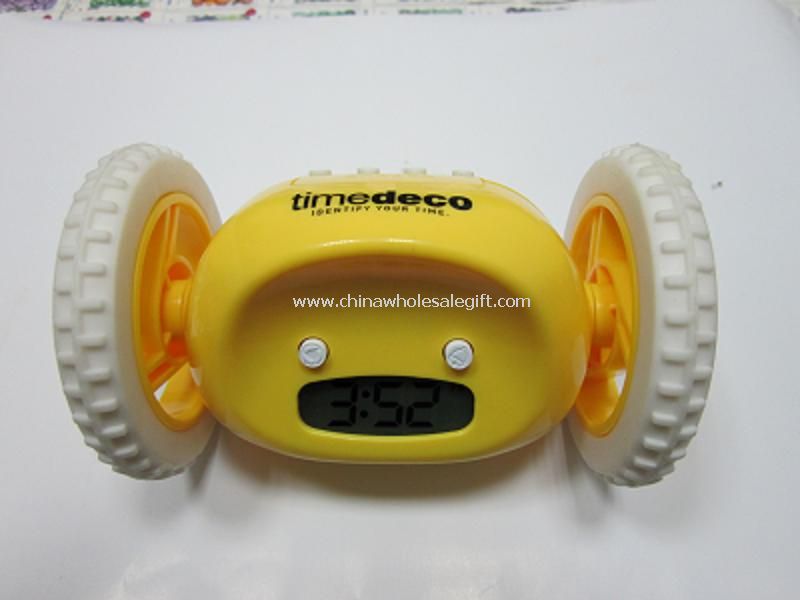
A wheel alarm clock sets itself apart the moment the bell rings, because the chase begins on the nightstand rather than in the sleeper's head. The body sits on a rolling wheel, and when the alarm fires the clock trundles off the table and across the floor, forcing a groggy owner out of bed to retrieve it. It is a playful remedy for chronic snoozing.
The mechanism is simple and durable: a battery-driven movement, a weighted wheel housing, and a trigger that releases the drive at the set time. Buyers should confirm wheel grip on hardwood and carpet, check that the alarm switch resets cleanly, and ask how the clock behaves when it rolls into a wall. Plastic housing quality and motor noise are the practical points to compare across suppliers.
This shelf is deliberately narrow, with two direct items that share the runaway concept and sit alongside a running alarm clock variant. Promotional suppliers favor the format because the demonstration sells itself at trade shows and in gift catalogs. Importers typically order mixed color assortments and watch packaging strength, since a clock designed to roll needs a carton that survives rough handling.
End users are light sleepers, students, shift workers, and anyone who has learned to silence a bedside alarm without waking. The appeal is behavioral rather than technical: motion converts a passive sound into a physical task. Shoppers browsing nearby radio, digital, or travel alarm clocks often choose this style as a novelty gift, so shelf placement near conventional table clocks captures both practical and humorous intent.
Buyers evaluating the subtree should request a working sample, time several alarm cycles, and test the wheel on smooth and soft surfaces. Confirm the battery compartment door stays shut through repeated falls, and review retail packaging for clear setup instructions. Because the line covers only two products, depth is limited, so pair the assortment with related novelty formats to fill a themed display.
2 products