Knitted Blanket
A knitted blanket begins with yarn loops worked row upon row, which gives the fabric its stretch, its soft hand, and the small textured surface that traps warmth without weight. On this shelf the construction favors compact stitches suited to close cradling, and the finish is deliberately gentle against skin. Buyers sourcing for infant and juvenile programs will find the scale already calibrated for small bodies.
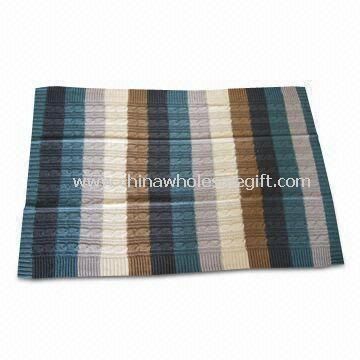
Machine knitting lets the same pattern repeat with even tension across a run, so stitch density and thickness stay consistent from the first piece to the last in a batch. Edges are usually finished with a binding or a turned hem rather than a raw cut, a detail that matters where the blanket will be washed often. Check that the hem sits flat and that no yarn ends work loose at the corners.
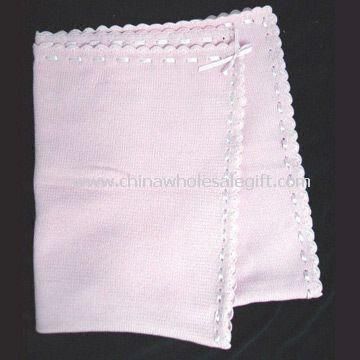
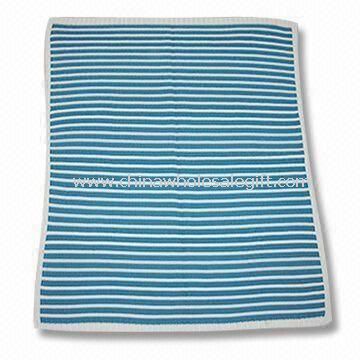
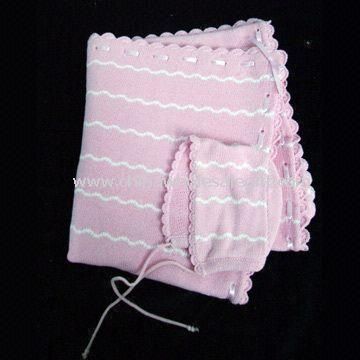
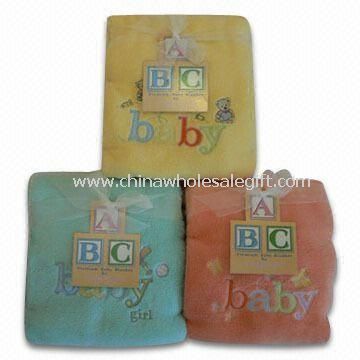
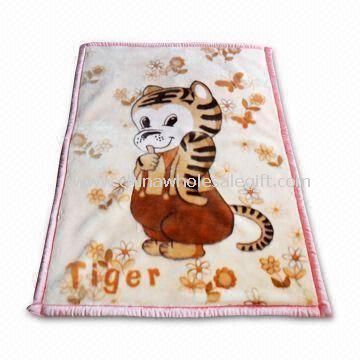
Related items on this shelf lean toward the nursery: a version suitable for children, baby knitting blankets, and baby blankets with knitted fabric binding hem. Together they show how a single knitting program can be tilted toward a younger user by adjusting size, stitch scale, and trim. Promotional suppliers often group these variations to fill a coherent infant assortment.
End users reach for these blankets in cribs, strollers, and car seats, and adults adopt them as lap covers and decorative throws on a couch or chair. The open, breathable knit suits layered use in mild rooms. Distributors should ask about fiber content, since acrylic, cotton, and blended yarns behave differently in washing, pilling, and color retention over repeated cycles.
For wholesale sourcing, confirm the yarn composition and the gauge in writing, request pre-production samples in each colorway, and verify shrinkage after laundering rather than before. Ask how the binding hem is attached at stress points and whether size tolerances are stated per piece. Confirm packing format and carton counts so landed quantities match the plan.
8 products