Lapel Pin Plating Wear: 5 Finishes Ranked by Durability
Plating is the first thing to fail on a lapel pin that is worn every day. The base metal and the shape survive; the thin surface layer does not. Choose the finish by how the pin will be used and which wear test the factory can actually show you, rather than by the colour that looks best in a sample photo.
Where a lapel pin actually wears
Wear concentrates in three places: the raised edges of the design, the clasp on the back, and any point that rubs against clothing or a bag strap. A finish can look flawless out of the box and show bare metal at those contacts within weeks. The thickness of the plated layer and the quality of the undercoat decide how long that takes, not the name of the colour.
Ask what sits under the visible layer. A nickel or copper undercoat improves adhesion and slows corrosion, while a very thin decorative layer over a soft base wears through quickly. Two pins with the same gold colour can behave very differently for this reason.
Five finishes ranked
Nickel plating is the workhorse: good tarnish and rub resistance at a modest cost, with a silver tone that suits most designs. Rhodium performs similarly on corrosion and is harder, but it costs more and is essentially limited to a bright silver look. Gold plating gives the warm appearance many programs want, yet a thin gold layer will wear at the edges; specify the thickness and insist on a sound undercoat.
Antique brass is valued for a warm, aged look where some patina is part of the intended finish, so tarnish resistance is less relevant than consistency between pieces. An epoxy fill sealed under a clear lacquer gives the widest colour range and good surface protection, though the lacquer itself can scuff if the pin is rubbed hard against a strap.

Tests you can ask the factory to run
Two tests separate a real claim from a catalogue adjective. A salt spray exposure checks how quickly the finish corrodes in a controlled humid, salty atmosphere; ask for the duration and the acceptance criterion, not just a pass. A rub test, in which a cloth or abrasive pad is drawn across the surface a set number of times, shows whether colour transfers or the layer breaks through.
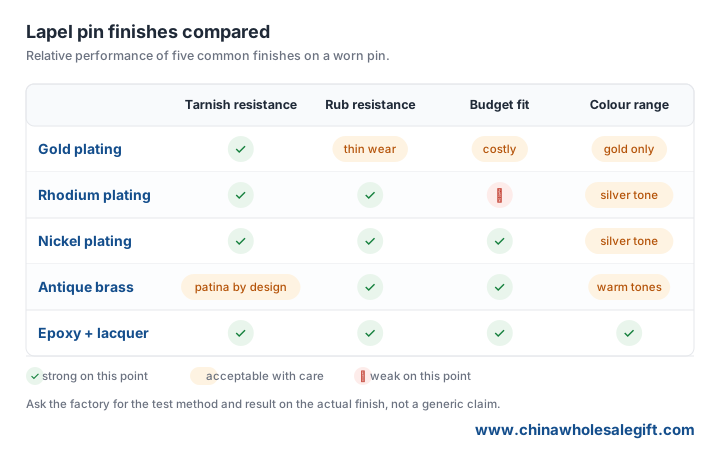
Require the test on the exact finish and undercoat used for your order, with a dated result. A generic certificate for a different plating line says nothing about your pins.
Matching finish to budget and use
For a high-volume giveaway worn occasionally, nickel gives the most predictable result per dollar. For an award or identity pin worn daily, pay for a heavier plating and confirm the rub result. Where a specific colour is non-negotiable, epoxy under lacquer protects the colour better than a thin plated layer.
Decide the ranking with the end use in mind rather than chasing the most prestigious name. A thin gold pin that shows base metal in a month is a worse outcome than a well-plated nickel pin that stays even.
Batch consistency matters as much as the average result. A plating line that produces a beautiful first run can drift as the bath ages, so ask whether the factory controls the solution concentration and replenishes it on a schedule, and whether the finish is checked at the start and end of a run. For a program with several reorder cycles, request that the approved sample be retained by both sides and referenced on every subsequent purchase order. That sample becomes the standard against which colour and coverage are judged, and it prevents a slow change in the plating bath from being accepted as normal simply because each individual batch looked acceptable in isolation.
Also think about what the pin will sit against. A darker uniform or a textured bag strap can abrade a raised edge faster than a smooth pocket, and the same finish will last differently in those two settings. If the pin is part of a uniform program, ask for feedback after a few weeks of wear before committing to a large reorder; a small pilot batch reveals wear patterns that a sample photographed on day one never will.
Put it on the purchase order
Specify the finish, the undercoat, the minimum plating thickness where applicable, and the test with its acceptance criterion as lines on the order. Approve a worn-in sample if one is available, not only a fresh one. To compare shapes before choosing a finish, review the lapel pins range.
Send us your design and how the pin will be worn, and we will recommend a finish with the test result that supports it.
Sourcing business gifts for your team?
Send your brief and quantity for a quote and a digital proof.
Get a free quote


