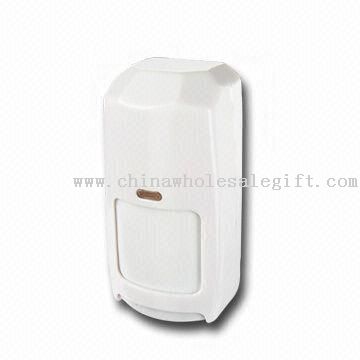
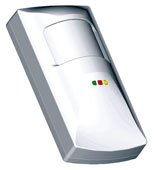
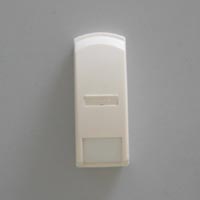
PASSIVE INFRARED DETECTOR
A passive infrared detector watches for the sudden shift in heat that a person moving through a room creates, and it answers with a quiet alarm signal rather than a beam or a trip wire. Residential installers favor it because it needs no transmitter at the doorway and no physical contact with anyone passing through. The sensor simply reads the room and reacts when a warm body crosses its field of view.
Inside the housing, a segmented lens divides the protected area into zones and directs incoming body heat onto a pyroelectric element. When someone walks across those zones, the element registers a change and the circuit trips. Curtain passive infrared detector versions shape that field into a narrow vertical sheet for doorways and windows, while a wireless passive infrared detector skips the cable run and reports back over a radio link.
Buyers sourcing this shelf for distributors and promotional programs should confirm what each unit includes: mounting bracket, battery or terminal block, and the lens pattern that matches the installation. Ask how the detector handles pets and drafts, whether the housing adjusts for wall or corner mounting, and how the relay behaves when power returns after an outage. Packaging and labeling matter when the units travel as part of a larger alarm kit.
Installers value a simple two-wire or four-wire connection and a cover that comes off without tools. For the householder, the appeal is invisible coverage in a hallway, garage, or back room, with no routine to learn beyond arming the panel at night. Units that sit quietly on a wall and blend with the trim are easier to live with than a prominent box.
This shelf sits alongside related sensing hardware, so sorting the ordinary wide-angle unit from a wired double curtain model keeps an order clean. Check the coverage pattern, the supply voltage, and the terminal layout before committing to a mixed shipment, and group similar housings so the end user gets a coherent kit from a single supplier.
10 products