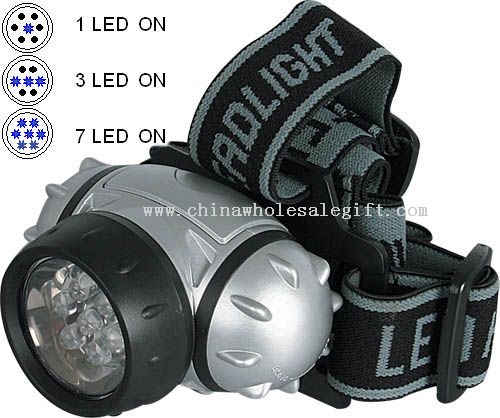
Headlamp Lumen Claims: How to Measure Before You Buy 1,000
A headlamp that claims 1,000 lumens and delivers 600 is not usually lying about the LED. It is quoting the emitter at its rated drive current, measured on a bench that has no lens, no reflector and no battery sag. Before committing to a thousand units, measure three pieces the way a user will run them and compare the delivered figure with the claim. The gap tells you more about the supplier than any datasheet will.
What the lumen number is actually measuring
Lumens describe total light output, not brightness in a direction and not how far the beam throws. A manufacturer can quote the bare LED at its maximum rated current, which is the number on the component datasheet, or the finished lamp after the lens has absorbed a share and the driver has capped the current, which is the number a user experiences. Both are honestly measured; they are just measured on different things.
Ask which one the quote refers to, and ask at what battery voltage; the headlamps range shows both styles in the same catalogue. A headlamp driven at full power from fresh alkaline cells will not hold that output once the cells sag, and a claim taken at the start of a run says nothing about minute thirty. The question to put in writing is simple: measured output at five minutes, at thirty minutes, and at the end of the stated runtime.
The three-piece test, and why one sample proves nothing
One sample tells you what one unit does. Three tells you whether the production spread is controlled, which matters more at a thousand pieces than at one. Run all three side by side in the same conditions and look for consistency before you look for absolute output: if two units read within a few percent and the third is well below them, the issue is assembly or component sourcing rather than the design.
Photograph the three beams against a wall at a fixed distance with the camera on a tripod and the same exposure. The photo will not give you a lumen figure, but it will show a hotspot that is off centre, a beam that is oval rather than round, and a colour difference between units that a spec sheet never mentions. Those are the defects that generate returns on a promotional headlamp.
Measuring light without a laboratory
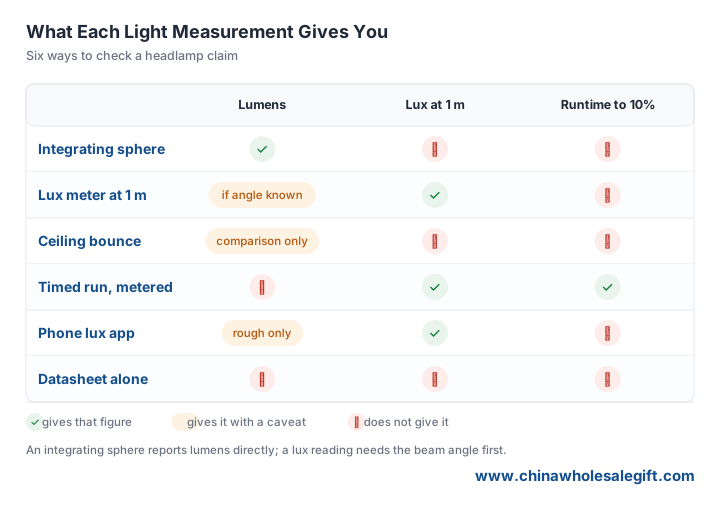
An integrating sphere measures lumens directly, and almost nobody buying a thousand headlamps has one. A lux meter is the practical substitute, and the conversion is straightforward if you know the distance: illuminance in lux at one metre is numerically equal to intensity in candela, and at two metres you multiply the reading by four because illuminance falls with the square of distance. That gives you peak beam intensity, which is the honest number behind a beam distance claim.
Lumens are harder to derive this way, because you need the beam angle to integrate intensity over the cone, and a headlamp with a zoom or a wide flood setting does not have one fixed angle. Two practical routes exist. Compare the sample against a reference lamp of known output on the same wall at the same distance and judge the ratio, or send one unit to a test house for a sphere reading and use that as the anchor for everything else in the order.
A phone light meter app is uncalibrated and may apply its own exposure logic, but it is stable enough to compare three samples measured in one session. Use it to find the outlier, not to certify an absolute figure.
Runtime is where claims stretch furthest
The recognised handheld light standard defines runtime as the time until output falls to a fixed fraction of the initial level, typically ten percent, rather than the time until the lamp goes dark. That definition is fair, because a lamp at ten percent is no longer useful for work, but it means a runtime number and a lumen number are measured at different moments. A claim of a thousand lumens and eight hours can both be true and still describe a lamp that holds a thousand lumens for fifteen minutes.
Test it directly: run the sample on fresh cells, take a reading every five minutes for the first half hour, then every fifteen, and plot the curve. A driver with proper regulation holds output flat and then steps down; a direct-drive lamp fades from the first minute. The shape of the curve is what your customer will notice, and it is invisible in every figure on the box.
Battery chemistry, heat and the drop you will see
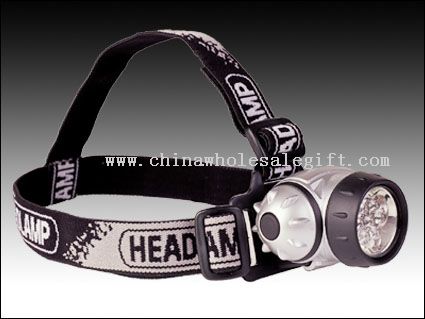
Three AAA alkaline cells are the common power source for a promotional headlamp, and alkaline voltage falls steadily under load, so output tracks the discharge curve. Lithium cells hold voltage better and cost more, and a rechargeable pack with a regulated driver holds output flat until the protection circuit cuts in. Specify the cell type in the order, because the same lamp body will measure very differently on the three options.
Heat is the second limiter. A small housing cannot shed the wattage that a large one can, so a design that is thermally honest steps down after a few minutes rather than cooking the LED. That step is a feature, and it should be declared. A supplier who cannot say when the step happens, or by how much, has not characterised the product.
Writing the claim into a purchase order
Translate the measurement into four lines the factory can sign: delivered output at five minutes on the specified cell, output at thirty minutes, runtime to the ten percent point, and the unit-to-unit spread across the sample. Add the beam distance if the marketing copy mentions throw, since distance and intensity are linked and only one of them is usually tested.
A thousand units of a lamp that measures 40 percent below its box copy is a thousand returns, a chargeback, or a reprint of the packaging. Three samples, a lux meter, half an hour of readings and four lines in the order cost a fraction of that, and they turn a marketing number into a specification.
Sourcing business gifts for your team?
Send your brief and quantity for a quote and a digital proof.
Get a free quote